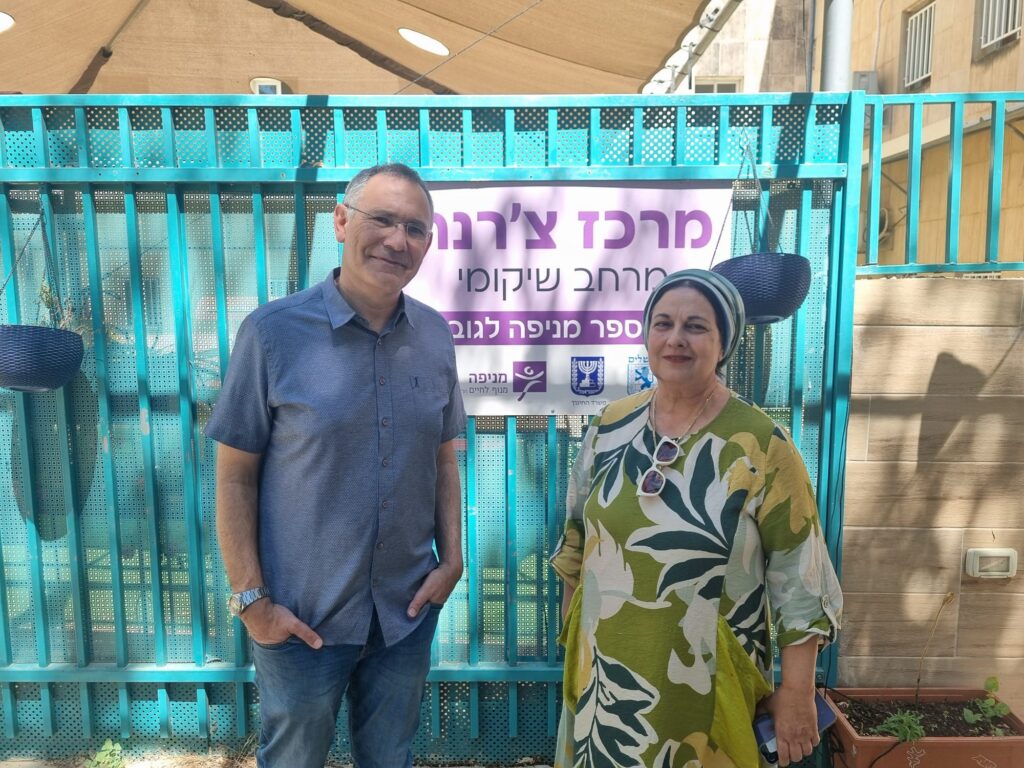


The Cherna Center — an intensive therapeutic and rehabilitation setting for adolescents facing mental health challenges — hosted the head of the Ministry of Health’s Mental Health Administration and members of his team for a professional visit focused on the rehabilitation of adolescents and young adults in the community and on the growing needs in this field in recent years.
The visit, which took place in June 2026, provided an opportunity for professional dialogue and joint thinking about the support needed by adolescents and young adults coping with mental health challenges, as well as ways to strengthen continuity of care and rehabilitation within the community.
During the visit, the therapeutic and rehabilitation services provided at the center were presented alongside the challenges currently faced in the field. The discussion highlighted the need for better coordination of services and stronger collaboration between government ministries and Israel’s health funds, in order to enable more adolescents in need of intensive rehabilitation to receive continuous, professional, and individually tailored support.
The participants listened closely and with empathy to the challenges and needs presented, and expressed their willingness to continue exploring ways to advance appropriate solutions for adolescents and young adults in the community.
The visit was attended by Dr. Gilad Bodenheimer, Head of Mental Health Services at the Ministry of Health; Ms. Revital Orden, Director of the Ambulatory Care Division in the Mental Health Administration; Ms. Shoshi Gutterich, Project Manager in the Community Division; and Dr. Alex Gizonterman, psychiatrist with the Mental Health Administration.
The Cherna Center in Jerusalem is MENIFA’s flagship center in the field of mental health. The services provided at the center are part of MENIFA’s holistic therapeutic model, which views each young person as a whole. Alongside addressing mental health challenges, the model places emphasis on strengthening healthy areas of functioning and building personal strengths by providing a comprehensive therapeutic and rehabilitation framework alongside medical care.
We thank our guests for their visit, for listening with openness and sensitivity, for the important professional dialogue, and for their willingness to work together to strengthen the continuum of therapeutic and rehabilitation services.
We are deeply grateful for a meaningful, professional, and hope-inspiring meeting.תן